Akka Mahadevi: Kannada's Fearless Vachana Poet-Saint
c. 1130 to 1160
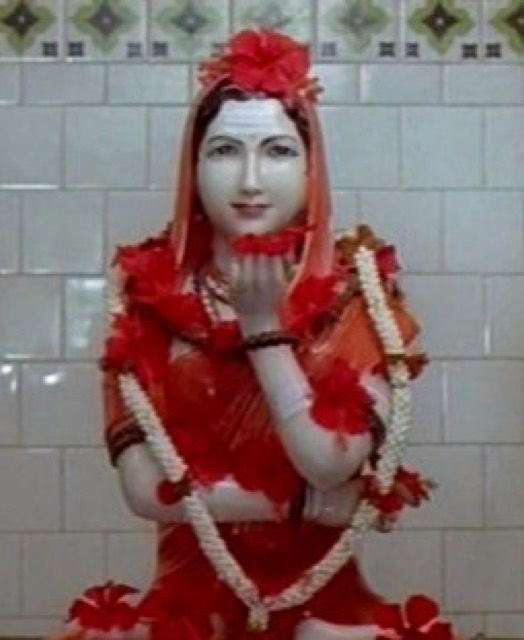
Kannadiga, CC BY-SA 4.0, via Wikimedia Commons
Quick answer Akka Mahadevi (12th century) renounced a king for Chennamallikarjuna and wrote about 430 vachanas of fierce devotion. Her life, famous vachanas and legacy.
Quick facts
- Born: c. 1130, Udutadi, Shivamogga district, Karnataka
- Died: c. 1160, Kadali near Srisailam
- Language: Kannada
- Known for: About 430 vachanas of intense personal devotion
- Signature (ankita): Chennamallikarjuna
- Honoured as: Akka, elder sister, by the Sharana movement
Picture a young woman in twelfth-century Karnataka walking out of a royal household with nothing, by some accounts not even clothes, having decided that no earthly husband had a claim on her because she was already spoken for. The bridegroom she claimed was Shiva, whom she addressed in poem after poem as Chennamallikarjuna, a name often rendered in English as the beautiful lord, white as jasmine. Her name was Mahadevi; the tradition added Akka, elder sister, as a mark of the respect she earned from the greatest saints of her age.
Roughly 430 vachanas are attributed to her, and they are among the most intense first-person poems in any Indian language: love poetry, protest poetry and spiritual autobiography fused into one voice. For a modern writer, Akka Mahadevi is a masterclass in stakes. Every poem risks everything: reputation, safety, the body itself. If your own work feels careful lately, she is the poet to read.
Who she was, as far as we know
Tradition places her birth in Udutadi, a village in present-day Shivamogga district of Karnataka, in the twelfth century. Accounts hold that she was devoted to Shiva as Chennamallikarjuna from childhood, that a local ruler named Kaushika sought and by some versions obtained her in marriage, and that she renounced the match and walked away to live as a wandering devotee. The most famous strand of the legend says she gave up clothing altogether, covered only by her long hair, an act that turned her body into an argument against everyone who thought a woman's body was theirs to police.
Her wanderings took her to Kalyana, the centre of the sharana movement led by Basavanna. There, the story goes, the formidable mystic Allama Prabhu interrogated her before the Anubhava Mantapa assembly, questioning her renunciation, and her answers won her a seat among the saints. She is said to have spent her final years at the holy mountain of Srisailam and to have died young. Every detail should be held lightly; the poems are the reliable biography.
The ankita as a love-name
Like every vachana poet, she signs her poems with an ankita, and hers is doing something unusual. Kudalasangamadeva, Basavanna's signature, names a place and a presence. Chennamallikarjuna is more intimate: a beloved's name, spoken the way you say the name of someone you cannot stop thinking about. Poem after poem turns on the moment the name arrives, and because the name means something like the lovely lord white as jasmine, an entire sensory world of flowers, whiteness and fragrance comes with it.
The craft lesson is about address. A poem aimed at a named, particular you has a temperature that a poem about a subject never reaches. She did not write about longing. She wrote to its object, by name, hundreds of times.
Signature move: the fearless first person
Most devotional poets of her era performed humility. Akka Mahadevi's speaker negotiates, demands, defies. Her vachanas dismiss mortal husbands as perishable, answer critics who sneer at her nakedness, and declare her marriage to the divine as settled fact rather than aspiration. When the poems do show doubt or desperation, and they often do, the desperation is stated with the same directness as the defiance, which is exactly why it convinces.
Modern poets flinch from this register, fearing melodrama. Her work shows the difference: melodrama is unearned intensity, and she earns hers with concrete detail and total commitment. There is no ironic distance to retreat into, and the poems are stronger for it.
Signature move: nature as wardrobe and witness
Stripped of home, family and clothing, her speaker dresses in the world instead. Light, hair, hills, moonlight, creepers and above all jasmine recur across the vachanas until the natural world feels like both her garment and her witness. In one much-loved vachana she addresses the birds and bees directly, asking whether they have seen the one she loves, an old folk gesture she sharpens into aching specificity.
Notice how economical this is. One governing image field, drawn from the meaning of the beloved's own name, unifies hundreds of separate poems. A contemporary poet can do the same: choose an image family and let it become your signature weather.
Signature move: the argument with the world
A striking number of her vachanas are structured as replies. Someone has questioned her renunciation, mocked her body, doubted her sanity or proposed marriage, and the poem is the answer. This gives her work a built-in drama: you always sense the hostile question just off stage. The poems that answer body-shaming are the most celebrated, turning the accusers' gaze back on itself and asking, in effect, why the coverings of cloth matter to men who cannot see past skin in the first place.
Writing your own reply-poems is one of the fastest ways to find urgency. A poem that answers a real accusation never lacks a reason to exist.
What you can learn from Akka Mahadevi
Her techniques travel well beyond devotional poetry, into love poems, protest poems and any poem that needs nerve.
- Address your poem to a named, particular you rather than writing about a topic.
- Choose one image family, as she chose jasmine and light, and let it recur across many poems.
- Write a reply to a real criticism you have received; let the critic's voice open the poem.
- State your boldest claim plainly, then spend the poem paying for it with concrete detail.
- Let desire and defiance share a stanza; she rarely separates them.
Where to start reading
The widest door for English readers is A. K. Ramanujan's Speaking of Siva, which gives her a substantial section beside Basavanna and Allama Prabhu; later translators, including Vinaya Chaitanya in Songs for Siva, offer fuller selections. In Kannada, her vachanas appear in all standard sharana anthologies, and schoolchildren in Karnataka still learn them by heart. Read her together with Basavanna to feel the range of the vachana form: his poems argue with society, hers argue with everything, including heaven. Then try writing one poem with a tenth of her nerve and see how quickly a draft stops being polite; poems with real stakes are the ones that stay with judges and readers alike.
Famous poems by Akka Mahadevi: Kannada's Fearless Vachana Poet-Saint
- The vachanas of renunciation: The poems around her walking out on King Kaushika: she weighs a mortal husband against her chosen lord Chennamallikarjuna and leaves the palace, by tradition clothed only in her hair. No woman in Kannada had written anything like it.
- The Kalyana testing vachanas: Her recorded exchange with Allama Prabhu at the Anubhava Mantapa, where the assembly questioned her renunciation and her answers won her the title Akka, elder sister, from men twice her age.
- The longing vachanas: Bridal mysticism at white heat: the soul as lover, the god as the only bridegroom worth having. These are the most translated and most quoted of her poems.
Life at a glance
- c. 1130: Born at Udutadi in the Malnad region of Karnataka.
- Youth: By tradition, married to King Kaushika on conditions he broke; she renounces palace, marriage and clothing itself and walks toward Kalyana.
- At Kalyana: Tested by Allama Prabhu and the Sharanas at the Anubhava Mantapa, and admitted as Akka.
- c. 1160: Withdraws to Kadali, the plantain grove near Srisailam, and dies young, perhaps around thirty.
What poets can take from this
- Read five of her vachanas, then write the accusation each one seems to be answering.
- Draft a poem addressed by name to someone or something you love without qualification.
- Pick one flower, one colour and one time of day as your recurring image family for a month.
- Rewrite a cautious draft with every hedge removed: no perhaps, no almost, no maybe.
- Write the poem you would only publish if you stopped worrying what relatives think.
- Study how she makes the body an argument, not a decoration.
Try it yourself
Write a reply-poem: begin with a criticism someone actually aimed at you, quoted or paraphrased in the first line, and answer it with a poem so specific and unashamed that the question looks small by the end.
Questions
What does Chennamallikarjuna mean?
It is Akka Mahadevi's ankita, her signature name for Shiva, associated with the deity at Srisailam. English translators often render it along the lines of the beautiful lord, white as jasmine, which is why jasmine imagery runs through her poetry.
How many vachanas did Akka Mahadevi write?
Around 430 vachanas are attributed to her, though exact counts vary between manuscript traditions. She is also credited with longer works in Kannada, but the short vachanas are the core of her fame.
Why did Akka Mahadevi renounce her marriage?
Tradition says she regarded Shiva, as Chennamallikarjuna, as her true husband and refused to accept a mortal ruler's claim on her. Whatever the historical facts, her vachanas consistently treat earthly marriage as perishable and her divine attachment as the only durable one.
What is Akka Mahadevi famous for?
Akka Mahadevi is famous as the boldest woman poet of the 12th-century vachana movement. She renounced a royal marriage for her chosen deity Chennamallikarjuna, defended her freedom before the Sharana assembly at Kalyana, and left about 430 vachanas whose fierce, personal devotion still startles readers.
This entry on Akka Mahadevi: Kannada's Fearless Vachana Poet-Saint is maintained by the Writory editorial team for the poetry collection. Enter the poetry contest.
Current poetry contest: Enter the October round. Entries close October 25, 2026 at 11:59 PM GMT+5:30; results are scheduled for October 30, 2026 at 8:00 PM GMT+5:30. Every poem receives a five-criteria score and certificate.
Enter a Writory poetry contest
Enter the October contest and have your own poem read and scored. That first entry makes you a Writorian.