Avvaiyar: Tamil's Timeless Grandmother of Wisdom Poetry
Sangam era to the 12th century (more than one poet bore the name)
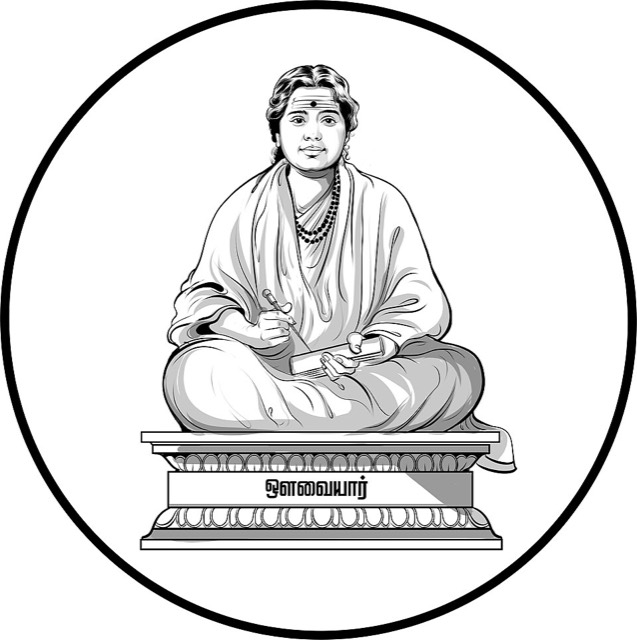
Valluvar Vallalar Vattam, CC0, via Wikimedia Commons
Quick answer Avvaiyar is Tamil poetry's beloved elder: the Sangam poet of Purananuru and the later author of Aathichoodi and Moodhurai. Her life, legends and famous works.
Quick facts
- Name means: Respected elder woman
- How many Avvaiyars: At least two: one in the Sangam era, one around the 12th century
- Sangam Avvaiyar: Purananuru poems; famed friendship with the chieftain Athiyaman
- Medieval Avvaiyar: Aathichoodi, Konrai Vendhan, Moodhurai, Nalvazhi
- Language: Tamil
- Legacy: The Aathichoodi still opens Tamil schooling today
For centuries, Tamil children have begun their education with three words: aram seya virumbu, wish to do good. That is the first line of the Aathichoodi, a sequence of single line maxims ordered by the Tamil alphabet, and its author is remembered as Avvaiyar, the white haired grandmother of Tamil letters. Her statue stands on Chennai's Marina Beach, her verses open school assemblies, and her name is close to a synonym for wisdom itself across the Tamil world.
For a working poet, Avvaiyar is the great teacher of the shortest forms. Nobody in any literature has compressed moral instruction into fewer words with more staying power. This guide looks at how the compression works: the leading verbs, the alphabet used as scaffolding, the household image that carries a lifetime's judgement. These are techniques you can lift directly into your own practice, whatever you write.
One name, probably several poets
Honesty first: Avvaiyar is a title as much as a name, meaning something like respected elder woman, and scholars are confident it covers more than one poet. An Avvaiyar of the Sangam era, roughly two thousand years ago, wrote courtly poems and elegies preserved in anthologies like the Purananuru; her verses on her friend and patron, the chieftain Athiyaman, include some of the most moving laments in early Tamil. A later Avvaiyar, generally placed in the medieval centuries, wrote the didactic classics every Tamil child still memorises: Aathichoodi, Kondrai Vendhan, Moodhurai and Nalvazhi.
Legend has fused these figures into a single immortal grandmother who wandered the Tamil country trading verses with kings and gods. The stories are wonderful, including the famous one in which the god Murugan, disguised as a boy in a fruit tree, teases her with a pun about roasted fruit and punctures her scholarly pride. Treat the tales as tales. What is solid, and what matters for craft, is the corpus itself.
The books children still memorise
The Aathichoodi is a set of single line moral instructions, over a hundred of them, arranged so that their opening letters follow the Tamil alphabet. The Kondrai Vendhan works the same way with slightly longer lines. Moodhurai, meaning old sayings, and Nalvazhi, the good path, are collections of four line venba stanzas in which an image from daily life carries a moral judgement. A devotional poem, the Vinayagar Agaval, is also attributed to her.
Think about what this corpus is for. It is literature designed to be installed in a child's memory before the child can evaluate it, and to keep unfolding in meaning for the next seventy years. That is a design brief most poets never dare take on, and the engineering that meets it repays close study.
Signature move one: one line, one law
An Aathichoodi maxim is a complete moral instruction in two to four words, and almost every one leads with or lands on a verb: wish to do good, never stop learning, do not envy. There is no ornament, no simile, no hedging. The line states a law and stops, trusting its own weight. Because the words are so few, each carries enormous stress, and the mnemonic force is total; the line enters memory on first hearing and never leaves.
One line attributed to her is a masterclass on its own, and being ancient it can be shared: katradhu kai mann alavu, kallaadhadhu ulagalavu. What you have learned is a handful of sand; what you have not learned is the size of the world. Notice the machinery: two balanced clauses, one image apiece, a hand against a world, and the humility arrives as a measurement rather than a sermon.
Signature move two: the alphabet as scaffold
Ordering maxims by the alphabet looks like a schoolteacher's trick, and it is, but it is also a serious compositional device. The arbitrary constraint forces coverage: the poet cannot keep circling favourite themes, because the next letter demands a fresh start. It aids memory, since each letter cues its line. And it quietly signals completeness, a whole alphabet implying a whole education.
English language poets know this as the abecedarian, and it remains one of the best generative exercises available. The constraint has no meaning, which is precisely its value: it drags subject matter out of you in an order your habits would never choose.
Signature move three: the homely image with a long shadow
The quatrains of Moodhurai run on analogy. A typical stanza observes that milk fed to a snake becomes venom, and lets you complete the thought: kindness given to the wicked turns harmful. Another compares good company and bad to things that improve or corrupt what touches them. The image always comes from the shared world, kitchens, fields, rivers, animals, so the audience verifies it from experience before the moral even arrives.
That sequencing is the trick worth stealing: evidence first, verdict second. The reader who has already nodded at the snake cannot easily refuse the conclusion. Poems that reverse the order, verdict first, evidence after, read as sermons; poems in Avvaiyar's order read as discoveries.
What you can learn from her
Practise the maxim as a form. Write ten one line instructions on a subject you know deeply, leading each with a verb and refusing every adjective you can live without. You will learn more about compression in an hour than a month of trimming longer drafts can teach. Then try a full abecedarian on a single theme and watch the alphabet pull material out of your blind spots.
Learn also from her authority. The grandmother voice works because it is plain, unhurried and unimpressed; it does not raise its volume, and it assumes the listener is capable of goodness. If your poems tend to plead or perform, drafting a few lines in the persona of a village elder who has seen everything is a surprisingly effective correction.
Where to start reading
All of the Avvaiyar corpus is ancient and freely available, with many English translations of varying character. Begin here:
- Aathichoodi, the alphabet ordered single line maxims, starting with aram seya virumbu
- Moodhurai, the analogy quatrains, for image driven moral argument
- Nalvazhi, the good path, quatrains on conduct and impermanence
- Kondrai Vendhan, a second alphabet ordered primer of maxims
- The Sangam era Avvaiyar's elegies for Athiyaman in the Purananuru, for the other, older voice under the same name
Famous poems by Avvaiyar: Tamil's Timeless Grandmother of Wisdom Poetry
- Aathichoodi: One hundred and nine single-line maxims arranged by the Tamil alphabet, beginning Aram Seya Virumbu, desire to do good. For centuries it has been the first poetry a Tamil child learns.
- Moodhurai: The elder's counsel: thirty quatrains of worldly wisdom, including the famous image that help done to the good is letters carved in stone, help done to the wicked, letters written on water.
- Nalvazhi: The good path: forty verses on right living, the companion to Moodhurai in every traditional Tamil education.
- Konrai Vendhan: Another alphabet-ordered string of one-line teachings, gentler and more domestic than the Aathichoodi.
- The Purananuru elegies for Athiyaman: The Sangam Avvaiyar's laments for her patron and friend, the chieftain who once gave her the rare gooseberry of long life rather than eat it himself. Among the most moving friendship poems in any old literature.
What poets can take from this
- Write ten one line rules about something you know deeply, each led by a verb and stripped of adjectives.
- Draft an abecedarian on one theme and let the alphabet force subjects your habits avoid.
- In a moral or political poem, place the image before the judgement so the reader assents to the evidence first.
- Test a short line by whether a listener can repeat it exactly after one hearing; if not, cut further.
- Balance two clauses against each other, one image each, and let the comparison do the arguing.
- Try a poem in the voice of an elder who has seen everything and is impressed by nothing.
Try it yourself
Write your own Aathichoodi: twelve single line instructions for surviving the present decade, arranged alphabetically by their first letters. Each line must lead with a verb, contain a concrete noun, and fit in a child's memory after one reading.
Questions
Was Avvaiyar a single person?
Almost certainly not. Scholars distinguish at least a Sangam era Avvaiyar, who wrote courtly poems and elegies around two thousand years ago, from a medieval Avvaiyar who wrote Aathichoodi and the other didactic classics. Popular tradition merges them into one immortal grandmother, which says something true about how unified the voice feels.
What does aram seya virumbu mean?
It is the first line of the Aathichoodi and means wish to do good, or desire to perform righteous deeds. Because the Aathichoodi is arranged alphabetically and taught early, this line has served as the opening sentence of Tamil education for centuries.
Can I read Avvaiyar in English?
Yes. The works are ancient and in the public domain, and multiple translations of Aathichoodi, Moodhurai and Nalvazhi exist online and in print. Translations vary widely in flavour, so compare two or three; the originals are so compact that every translator must make different sacrifices.
What is Avvaiyar famous for?
Avvaiyar is famous as the wise elder woman of Tamil poetry. The Sangam-era Avvaiyar wrote celebrated Purananuru poems and elegies for the chieftain Athiyaman; the medieval Avvaiyar wrote the Aathichoodi, Moodhurai and Nalvazhi, moral verses that still form the first lessons of Tamil schooling.
What is the Aathichoodi?
The Aathichoodi is a string of single-line moral maxims arranged in Tamil alphabetical order, attributed to the medieval Avvaiyar. Beginning with Aram Seya Virumbu, desire to do good, it has served as both alphabet primer and ethics lesson for Tamil children for around eight centuries.
This entry on Avvaiyar: Tamil's Timeless Grandmother of Wisdom Poetry is maintained by the Writory editorial team for the poetry collection. Enter the poetry contest.
Current poetry contest: Enter the October round. Entries close October 25, 2026 at 11:59 PM GMT+5:30; results are scheduled for October 30, 2026 at 8:00 PM GMT+5:30. Every poem receives a five-criteria score and certificate.
Enter a Writory poetry contest
Enter the October contest and have your own poem read and scored. That first entry makes you a Writorian.