Gurajada Apparao: The Reformer Poet of Desamunu Preminchamanna
1862 to 1915
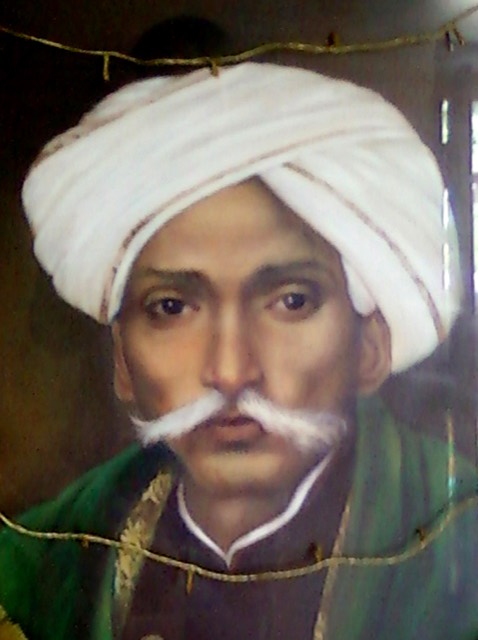
Adityamadhav83, CC BY-SA 3.0, via Wikimedia Commons
Quick answer Gurajada Apparao (1862-1915) wrote Kanyasulkam and Desamunu Preminchamanna and taught Telugu literature to speak its own tongue. His life, famous works and legacy.
Quick facts
- Born: 21 September 1862, Rayavaram, Andhra Pradesh
- Died: 30 November 1915
- Language: Telugu
- Known for: Kanyasulkam, Desamunu Preminchamanna
- Served: The court of Vizianagaram
- Pioneered: Spoken Telugu in literature; the Mutyala Saralu metre
A country is not its soil; a country is its people. Most Telugu speakers can finish that thought before you do, because it comes from a poem they learned as children: Desamunu Preminchamanna, written by Gurajada Apparao in 1910. The line, desamante matti kaadoyi, desamante manushuloyi, has outlived empires, film songs, and every politician who has quoted it. Very few poems become the conscience of a language. This one did, and it did so through craft choices worth studying closely.
Gurajada matters to a working poet for three reasons. He proved that the language people actually speak can carry serious literature. He built a new stanza form to fit that speech. And he showed how to write reform poetry that persuades instead of preaching. Since he died in 1915, everything he wrote sits safely in the public domain, so you can study the originals freely.
A court scholar who sided with the street
Gurajada Venkata Apparao was born in 1862 and spent his working life attached to the court of Vizianagaram under Maharaja Ananda Gajapati, one of the most enlightened patrons of his era. It was a comfortable position for a classicist, and Gurajada used it to do something classicists hated. In 1892 he published Kanyasulkam, a play attacking the practice of selling young girls as brides to old men, and he wrote it not in the ornate literary register but in living, spoken Telugu, slang and all. A much expanded version followed in 1909, and it remains among the most performed plays in the language.
That choice of register was a battle line. Telugu writing was then governed by grandhika bhasha, a frozen classical idiom nobody spoke. Gurajada, alongside the linguist Gidugu Venkata Ramamurthy, fought for vyavaharika bhasha, the spoken tongue, as a fit medium for literature. He also wrote what is often counted among the first modern short stories in Telugu, Diddubatu, in 1910. He died in 1915, at just fifty three, having redirected the entire current of the language.
The poem every Telugu child knows
Desamunu Preminchamanna is a patriotic song from 1910, and its title is already a command: love your country. But the poem spends its energy redefining what that command means. Loving the country is not chanting about it; it is feeding its people, working, growing, refusing idleness and quarrels. The famous couplet lands the redefinition: a country is not soil, a country is its people. Patriotism, the poem insists, is a verb performed on behalf of neighbours, not an emotion performed at a flag.
Notice the rhetorical build. The poem is a chain of imperatives addressed to you, each one stripping away a lazier version of love for the nation and replacing it with a working one. It flatters nobody. That is why it has never curdled into propaganda, and why schools still open assemblies with it more than a century later.
Signature move one: a metre made from speech
Classical Telugu prosody measured syllable weight in intricate patterns that pushed poets toward Sanskrit heavy diction. Gurajada devised Mutyala Saralu, strings of pearls: short four line stanzas governed by beat counts rather than classical syllable rules. The practical effect is enormous. Ordinary spoken Telugu drops into the form without being bent out of shape, and the short beat counted lines give the verse a proverb's memorability.
The transferable principle: when the inherited forms of your language fight the way you actually talk, do not abandon form, redesign it. A form should be a container shaped to your speech, not a costume your speech must squeeze into. Poets in English did the same in the same era, loosening the pentameter toward the spoken phrase.
Signature move two: the imperative address
Desamunu Preminchamanna is built almost entirely of commands to a listening you: love, work, build, stop quarrelling, look around you. Direct address does two things at once. It creates intimacy, because the poem speaks to one person, and it creates accountability, because that person cannot pretend the poem is about someone else.
Sustained imperatives are risky; a poem of orders can turn hectoring. Gurajada avoids this by making the commands concrete and achievable, and by aiming several of them at comfortable pieties rather than at the reader's failings. The poem corrects an idea of patriotism more than it scolds a person. When you write in imperatives, check where the finger points: at cheap versions of a value, not merely at the reader.
Signature move three: reform without sermon
Gurajada's social convictions were fierce, yet his best work persuades through story and character rather than lecture. Kanyasulkam gives its stage to Girisam, a magnificent, quotable fraud whose charm exposes the hypocrisies around him better than any moralising narrator could. The narrative poem Puttadi Bomma Purnamma follows a young girl married off against her interest, and lets the tragedy make the argument. Diddubatu reforms a husband through a small domestic ruse, with comedy doing the ethical work.
This is the reformer's craft problem in every age: conviction tempts you toward the sermon, and the sermon convinces nobody who was not already convinced. Gurajada's answer is to trust dramatisation. Build the character, stage the injustice, and let the reader arrive at the verdict feeling it was their own.
What you can learn from him
Write in the register you actually speak, and treat that as a discipline rather than a shortcut: spoken diction still needs rhythm, compression and design. Test your most important lines for repeatability; Gurajada's couplet survives because a stranger can carry it away after one hearing. If a line matters, make it short, balanced, and built on concrete nouns.
And if you write political or patriotic poems, apply his redefinition test. Take the abstract noun at the poem's centre, country, justice, freedom, and forbid yourself from using it except through people doing things. The moment your nation stops being soil and starts being a neighbour who needs feeding, the poem acquires hands.
Where to start reading
All of Gurajada's work is in the public domain, and the poems are short. Read in this order:
- Desamunu Preminchamanna, the national song and his most famous poem
- Mutyala Saralu, the poems in his pearl string metre, to hear speech become verse
- Puttadi Bomma Purnamma, the narrative poem of a girl's ruinous marriage
- Kanyasulkam, the 1909 play, for Girisam and the spoken language revolution
- Diddubatu, the 1910 short story often counted among the first modern ones in Telugu
Famous poems by Gurajada Apparao: The Reformer Poet of Desamunu Preminchamanna
- Desamunu Preminchamanna (1910): Love your country: the desabhakti song whose central line, desamante matti kaadoyi, desamante manushuloyi, a country is not its soil, a country is its people, every Telugu speaker can complete from memory.
- Mutyala Saralu: Strings of pearls: the poems in his new light four-line metre of the same name, which loosened Telugu verse from classical heaviness and let it talk.
- Kanyasulkam (1892): His play rather than a poem, but impossible to leave out: the first great work in spoken Telugu, attacking the sale of girl brides with comedy sharper than any sermon. Its 1909 revision is the classic.
- Diddubatu (1910): Often called the first modern Telugu short story: a husband corrected without a single raised word.
Life at a glance
- 1862: Born at Rayavaram in the Godavari country.
- 1892: Kanyasulkam is staged; Telugu literature's spoken-language revolution begins in a comedy.
- 1909: The rewritten Kanyasulkam appears, the version now counted among India's greatest plays.
- 1910: Desamunu Preminchamanna and Diddubatu in a single year: the anthem and the first modern story.
- 1915: Dies at 53; his line about a country being its people outlives every regime that has quoted it.
What poets can take from this
- Rewrite one of your ornate lines in the words you would use across a kitchen table, then restore only what the plain version truly lost.
- Test a key line by saying it once to a friend; if they cannot repeat it an hour later, shorten and balance it.
- Build a stanza form around your natural phrase length instead of forcing phrases into an inherited shape.
- In a political poem, ban the central abstraction and render it only through people performing actions.
- Aim imperatives at lazy versions of a value rather than at the reader personally.
- When conviction rises, switch from statement to scene and let a character carry the argument.
Try it yourself
Write a poem of instructions titled with a command, in short four line stanzas of roughly equal beats. Every instruction must replace a showy version of love for a place with a practical one, and the words soil, flag and pride are forbidden.
Questions
What does desamante matti kaadoyi mean?
It is the most famous line of Desamunu Preminchamanna and means a country is not soil; the following line completes it: a country is its people. Gurajada uses the pair to redefine patriotism as service to living neighbours rather than sentiment about territory.
What is Mutyala Saralu?
Literally strings of pearls, it is the stanza form Gurajada devised: short four line units measured by beat counts instead of classical syllable weight rules. It let spoken Telugu enter serious poetry without distortion, and he wrote Desamunu Preminchamanna in it.
Why is Kanyasulkam still important?
The play attacked the sale of young girls as brides and did so in living spoken Telugu at a time when literature was written in a frozen classical register. It is both a social landmark and a linguistic one, and its antihero Girisam remains one of the great comic characters of Indian theatre.
What is Gurajada Apparao famous for?
Gurajada is famous for the play Kanyasulkam, the first masterpiece of spoken Telugu, and for the patriotic song Desamunu Preminchamanna, whose line that a country is its people, not its soil, is among the most quoted in Telugu. He led the shift from scholarly to spoken language in Telugu literature.
This entry on Gurajada Apparao: The Reformer Poet of Desamunu Premincha… is maintained by the Writory editorial team for the poetry collection. Enter the poetry contest.
Current poetry contest: Enter the October round. Entries close October 25, 2026 at 11:59 PM GMT+5:30; results are scheduled for October 30, 2026 at 8:00 PM GMT+5:30. Every poem receives a five-criteria score and certificate.
Enter a Writory poetry contest
Enter the October contest and have your own poem read and scored. That first entry makes you a Writorian.