Bharathidasan: The Revolutionary Heir of Tamil Poetry
1891 to 1964
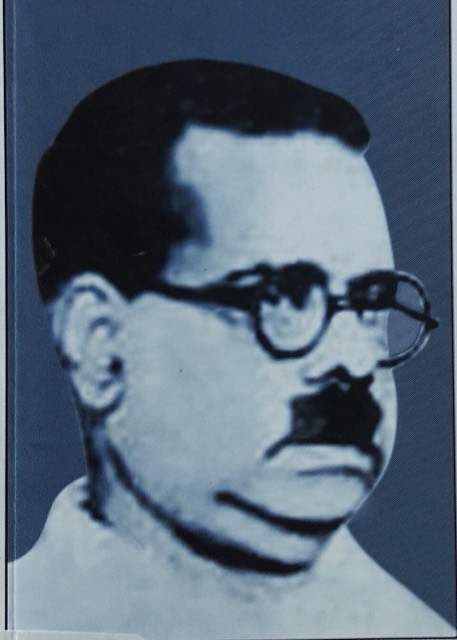
Public domain, via Wikimedia Commons
Quick answer Bharathidasan (1891-1964), Tamil's Puratchi Kavignar, wrote Kudumba Vilakku and Azhagin Sirippu and powered the Dravidian movement's poetry. His life and famous works.
Quick facts
- Born: 29 April 1891, Puducherry, as Kanaka Subburathinam
- Died: 21 April 1964
- Language: Tamil
- Pen name means: Disciple of Subramania Bharati
- Known as: Puratchi Kavignar, the revolutionary poet
- Honour: Sahitya Akademi Award 1969, posthumously
A young poet named Kanaka Subburathinam once heard Subramania Bharati recite in Puducherry and decided, on the spot, whose student he wanted to be. He took the pen name Bharathidasan, meaning servant of Bharati, and then spent the next five decades proving that a disciple can walk further than homage requires. Where Bharati sang of a free India, Bharathidasan sang of a free Tamil society: free of caste, of superstition, of the idea that a woman's place was silence. Tamil Nadu came to call him Puratchi Kavignar, the revolutionary poet, and the title stuck because the poems earned it.
For a writer today, Bharathidasan is a masterclass in one specific problem: how do you write poetry that carries an argument without collapsing into a pamphlet? He solved it with sound, with scene, and with a diction so clean that a farmer hearing the poem once could repeat half of it on the walk home. This guide looks at how he did that, and what you can take from him into your own work, whatever language you write in.
Who Bharathidasan Was
Bharathidasan was born in 1891 in Puducherry, then a French colonial territory, and lived until 1964. His early verse followed the devotional and nationalist currents of his time, but his life changed direction when he embraced the rationalist Self-Respect movement led by Periyar E. V. Ramasamy. From roughly the 1920s onward his poetry became the literary engine of the Dravidian movement: poems against caste hierarchy, against dowry, against the neglect of Tamil in favour of Sanskrit, and for the education of girls. He also served in the Puducherry legislative assembly, which tells you something about how public a figure a poet could be in that world.
His standing in Tamil letters is not a niche claim. Kudumba Vilakku, his long poem on family life, became a fixture of Tamil education, and his verse play Pisirandaiyar brought him a Sahitya Akademi Award after his death. Generations of Tamil schoolchildren met poetry through his lines. What makes him matter to a craft reader, though, is not the syllabus presence. It is that he took the oldest ambition of Tamil poetry, to be spoken aloud and remembered, and welded it to the newest subjects of his century.
Signature Move One: Plain Tamil as a Weapon
Bharathidasan wrote in a deliberately pure, spoken-adjacent Tamil, trimming Sanskrit loanwords and ornate compounds that had accumulated in literary verse. This was a political choice, part of the Tamil pride movement, but notice what it does as craft: it removes every barrier between the line and the listener. There is no vocabulary toll to pay before the meaning arrives. His famous lines praising Tamil itself work partly because the language of the praise demonstrates the thing being praised.
The lesson is not that you should purge your own language of borrowings. It is that diction is an argument. Every hard word in a poem asks the reader for trust, and Bharathidasan understood that a poem addressed to ordinary people must be built from their own mouth's materials. When he wanted grandeur, he got it from rhythm and image, never from rare words.
Signature Move Two: Rhythm Built for the Platform
Bharathidasan's poems were performed at rallies, conferences and school functions, and they are engineered for it. He favoured strong, regular beats with emphatic line endings, the kind of movement that lets a crowd anticipate the next stress. Read any passage of his aloud and your body starts keeping time. This is old Tamil practice, the recitational pulse of the tradition, redirected at modern public life.
Poets who write only for the page often let rhythm become an afterthought. Bharathidasan is a corrective. His metre is not decoration; it is delivery infrastructure. A line that lands on a firm beat gets remembered, and a remembered line keeps arguing after the meeting ends.
- He repeats syntactic frames so listeners can ride the pattern: same opening, new payload.
- He places the poem's key noun or verb at the metrical stress point, not buried mid-line.
- He keeps stanzas short enough to be absorbed in one breath of attention.
Signature Move Three: The Image That Argues
The risk of political poetry is abstraction: justice, equality, freedom, words that mean everything and picture nothing. Bharathidasan's answer was the argumentative image. In Kudumba Vilakku he does not lecture about the dignity of domestic labour; he shows a household, lamp by lamp, meal by meal, until the reader has felt the case. In Azhagin Sirippu, literally the laughter of beauty, he builds an entire aesthetic philosophy out of observed things: dawn light, a working body, a field after rain. Beauty, the poem implies, belongs to the world everyone lives in, not to temples and courts.
This is the move worth stealing. When you hold a conviction, resist stating it. Find the scene in which the conviction is simply visible, and describe the scene with enough care that the reader arrives at your conclusion feeling it was their own.
Signature Move Four: Women at the Centre, Not the Margin
Long before it was common, Bharathidasan wrote women as agents. His heroines argue, refuse, work and reason. Thamizhachiyin Katthi, the Tamil woman's knife, signals its stance in the title. He wrote against child marriage and for widow remarriage and girls' schooling, and he did it through characters rather than sermons, which is why the poems still read as drama rather than editorial.
For your own practice, the point generalises: check who acts in your poems. If the people your poem claims to champion only appear as victims or scenery, the poem undercuts its own politics. Give them verbs.
What You Can Learn From Him
First, decide who your poem is for and let that decide your diction. Bharathidasan chose the crowd over the connoisseur and accepted every consequence of the choice. You may choose differently, but choose consciously. Second, test your poems aloud. If a line cannot survive your own voice in an empty room, it will not survive a reader's inner ear either. Third, convert positions into pictures. Keep a private rule: no abstract noun gets to stay in a draft unless a concrete image within two lines is doing its work for it.
It is worth saying that these are exactly the qualities contest judges tend to reward. When Writory's judges score language, emotion and structure each month, the poems that rise are usually the ones a stranger could hear once and carry home, which is the standard Bharathidasan set for himself a century ago.
Where to Start Reading
Begin with Kudumba Vilakku, the family lamp, his most loved long poem and the clearest display of scene-built argument. Then Azhagin Sirippu for his aesthetics of the ordinary, and Pandiyan Parisu for narrative sweep. Thamizhachiyin Katthi shows the feminist edge of his work, and the verse play Pisirandaiyar, honoured with the Sahitya Akademi Award, shows him handling classical material with modern intent. Tamil readers can go straight to the originals; readers in other languages will find translations uneven, so treat any version you find as a window, not the wall itself.
Famous poems by Bharathidasan: The Revolutionary Heir of Tamil Poetry
- Kudumba Vilakku: The family lamp: a verse epic of ordinary domestic life, where the kitchen and the courtyard get the dignity classical Tamil reserved for kings.
- Azhagin Sirippu: The laughter of beauty: his celebration of loveliness in nature and the everyday, and the softest register of a famously fierce poet.
- Pandiyan Parisu: The Pandyan's prize: a narrative poem of Tamil pride and honour that mushaira-style recitation made famous across the Tamil country.
- Sanjeevi Parvathin Saral: On the slopes of the Sanjeevi mountain: romantic narrative verse whose music proved reformist poetry did not have to be plain.
Life at a glance
- 1891: Born at Puducherry as Kanaka Subburathinam.
- c. 1908: Meets Subramania Bharati, then sheltering in French Pondicherry, and becomes his devoted disciple, later taking the name Bharathidasan.
- 1920s onward: His poetry turns to rationalism, women's freedom, caste abolition and love of Tamil, becoming the voice of the Dravidian movement.
- 1964: Dies days short of 73; Tamil Nadu mourns the Puratchi Kavignar.
- 1969: Sahitya Akademi Award conferred posthumously.
What poets can take from this
- Read one Bharathidasan poem aloud, then read your latest draft aloud, and notice which one your mouth trusts more.
- Rewrite one abstract line in your current poem as a two-line domestic scene that implies the same claim.
- Try a stanza where every line ends on a stressed, meaningful word rather than a connective.
- Draft a poem in the plainest vocabulary you own, and force all grandeur into rhythm and image.
- Write a portrait poem in which a woman in your family acts, decides or refuses, rather than being described.
- Cut any word from your draft that your intended reader would need a dictionary for, then see what the loss teaches you.
Try it yourself
Write a poem titled after an everyday household object, in the spirit of Kudumba Vilakku, in which the object silently witnesses an injustice inside the home and the poem's argument is carried entirely by what the object sees, never by commentary.
Questions
Why is Bharathidasan called Puratchi Kavignar?
Puratchi Kavignar means revolutionary poet in Tamil. He earned the title through decades of verse attacking caste hierarchy, dowry, superstition and the suppression of women, written as part of the Self-Respect and Dravidian movements. The name distinguishes him from his mentor Subramania Bharati, who is usually called Mahakavi.
What is Kudumba Vilakku about?
Kudumba Vilakku, meaning the family lamp, is a long poem about domestic life that dignifies the everyday work of a household, especially women's labour. It became one of the most widely taught poems in Tamil Nadu because it pairs simple language with a humane social vision. It is the best single entry point into his work.
How is Bharathidasan different from Bharathiyar?
Subramania Bharati wrote mainly in the key of national freedom and devotional fire, while Bharathidasan, his self-declared disciple, turned the same energy toward social reform within Tamil society: caste, gender and language pride. Stylistically, Bharathidasan pushed diction even closer to spoken Tamil and wrote more sustained narrative poems.
What is Bharathidasan famous for?
Bharathidasan is famous as the Puratchi Kavignar, the revolutionary poet of Tamil: heir to Subramania Bharati, voice of the Dravidian movement, and author of Kudumba Vilakku, Azhagin Sirippu and Pandiyan Parisu. His poems argued for rationalism, women's education and the Tamil language itself.
This entry on Bharathidasan: The Revolutionary Heir of Tamil Poetry is maintained by the Writory editorial team for the poetry collection. Enter the poetry contest.
Current poetry contest: Enter the October round. Entries close October 25, 2026 at 11:59 PM GMT+5:30; results are scheduled for October 30, 2026 at 8:00 PM GMT+5:30. Every poem receives a five-criteria score and certificate.
Enter a Writory poetry contest
Enter the October contest and have your own poem read and scored. That first entry makes you a Writorian.