Sant Dnyaneshwar: The Teen Saint Who Wrote the Dnyaneshwari
1275 to 1296
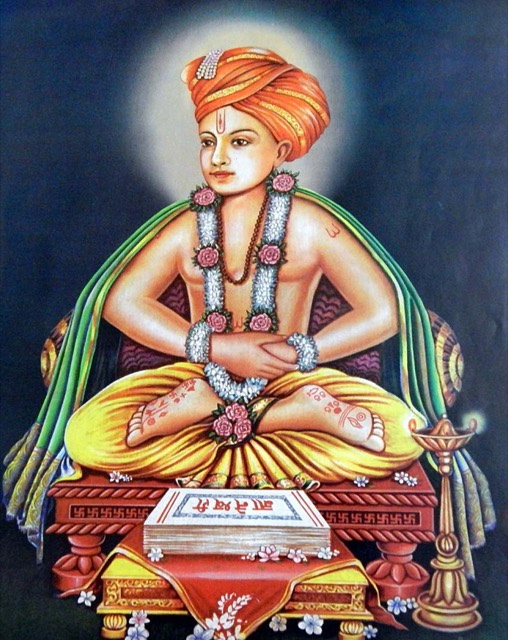
Swapniladitya, CC BY-SA 4.0, via Wikimedia Commons
Quick answer Sant Dnyaneshwar (1275-1296) wrote the Dnyaneshwari as a teenager and took samadhi at twenty-one. His life, the Pasaydan, Amrutanubhav and his living legacy.
Quick facts
- Also known as: Sant Jnaneshwar, Mauli
- Born: 1275, Apegaon on the Godavari, Maharashtra
- Samadhi: 1296, Alandi, aged 21
- Language: Marathi
- Known for: Dnyaneshwari, Amrutanubhav, Pasaydan
- Tradition: Varkari and Nath lineages
In 1290, in a temple hall at Nevase in Maharashtra, a boy of about sixteen stood beside a pillar and dictated a commentary on the Bhagavad Gita that ran to roughly nine thousand verses. He composed it not in Sanskrit, the sealed language of the schools, but in Marathi, the tongue of farmers, boatmen and grandmothers. The book became the Dnyaneshwari, and more than seven centuries later it is still recited aloud in homes and temples across Maharashtra, often by people who will never open another work of philosophy in their lives.
This page is not a hagiography. Sant Dnyaneshwar's life attracts legend the way a lamp attracts moths, and the miracles are a matter of faith rather than craft. What can be studied on the page is technique: a teenage writer took the most intimidating text of his tradition and made it walk into every kitchen in the Marathi country. If you have ever struggled to make a difficult idea feel human in a poem, he is one of the great teachers, and his methods are surprisingly easy to borrow.
A Family on the Wrong Side of the Rules
Dnyaneshwar was born in the late thirteenth century near Alandi, close to modern Pune, into a family the orthodox world refused to accept. His father Vitthalpant had taken sannyasa, the renunciate's vow, and was then ordered by his guru to return to his wife and live as a householder again. Children born after such a return were treated as outcastes by the Brahmin establishment of the day. The four siblings, Nivruttinath, Dnyaneshwar, Sopan and Muktabai, grew up excluded from the rituals and schooling their caste would normally have guaranteed, and all four are remembered as poets. Tradition holds that the parents ended their lives in atonement, leaving the children orphaned and still ostracised.
Out of that rejection came an extraordinary compression of achievement. Nivruttinath, initiated into the Nath yogic lineage, became his younger brother's guru, and Dnyaneshwar salutes him again and again through the Dnyaneshwari. By the time Dnyaneshwar took sanjeevan samadhi at Alandi in 1296, entombing himself in meditation at about twenty one, he had produced the Dnyaneshwari, the philosophical poem Amrutanubhav, the verse letter Changdev Pasashti and a body of devotional abhangas. The Varkari tradition, the great pilgrim movement of Maharashtra that walks to Pandharpur every year, regards him as its foundation stone. Pilgrims call him Mauli, mother. Very few writers in any language have earned that particular name.
Choosing Marathi Was the Boldest Line He Wrote
To feel the force of the Dnyaneshwari, remember what it defied. In the thirteenth century, serious commentary on the Gita belonged to Sanskrit, and Sanskrit belonged to a narrow, trained priesthood. Writing the deepest philosophy of the age in Marathi was a declaration that a ploughman's language could carry the heaviest cargo there is. Dnyaneshwar does not apologise for the choice. In a famous passage he boasts, with a young man's cheerful confidence, that his Marathi words will be so sweet they could win a wager against nectar itself.
That single decision helped open a door the bhakti movement would stream through for centuries: scripture and song in the languages people actually spoke, from Marathi abhangas to Hindi dohas to Bengali padas. For a working poet today the lesson still stands. The register you were told is too ordinary for serious subjects, the dialect of your street, your family's mixed idiom, may be exactly the instrument the subject needs. Difficulty does not require distance. Sometimes the boldest formal choice in a poem is simply the decision about whose language it will speak.
The Signature Moves
Read even a few pages of the Dnyaneshwari in translation and certain habits of craft show themselves quickly. Four are worth naming, because all four can be practised.
- The ovi metre: a folk stanza of three fuller rhyming feet followed by a short fourth that lands like a held breath, hypnotic in recitation and easy to memorise, which is exactly why the text survived in living voices.
- The homely metaphor chain: he explains non-duality and grace through lamp light, mirrors and reflections, the wave and the sea, the seed and the tree. He does not decorate an abstraction, he replaces it with a picture drawn from a household or a field.
- The listening room: constant direct address. He speaks to his audience as guests at a feast of meaning, asks them to lean closer, promises delight, and keeps his guru Nivruttinath present in the frame, so the whole work feels spoken rather than written.
- The widening ending: the Dnyaneshwari closes with the Pasaydan, a prayer that turns away from commentary altogether and asks grace for everyone, that the crooked lose their cruelty and every being receive what it needs. It remains one of the most recited passages in Marathi.
What You Can Learn
Start with the metaphor discipline. Take the most abstract belief or fear in your notebook and forbid yourself every abstract noun while writing about it. Dnyaneshwar's method suggests the test: if a listener who never went to school cannot see your idea, you have not finished writing it. Lamps, mirrors, seeds and water carried Vedanta across seven centuries. Your kitchen can carry your metaphysics too.
Then borrow the shape of the ovi without needing Marathi. Try stanzas of three long lines and one short one, letting the clipped fourth line land each unit like a step on a stair. The pattern teaches something subtler than rhyme: recurring asymmetry keeps a long poem moving while giving the ear a place to rest. Finally, practise the widening ending. Many poems close by tightening on the self. The Pasaydan closes by opening outward, from one speaker's labour to a blessing on everybody. Ending a personal poem with a turn toward other people is an old move, and it still catches readers off guard in the best way.
The Letter to a Proud Yogi
One smaller work deserves a writer's attention: the Changdev Pasashti, sixty five verses addressed to Changdev, a yogi whom legend credits with vast age and supernatural powers. Tradition tells that Changdev, unsure how to address a boy whose realisation outranked his own, sent a letter that was entirely blank. Dnyaneshwar answered the blank page with a poem.
Whatever one makes of the legend, the form is instructive: a whole poem framed as a reply, gentle in tone, correcting pride without humiliation. The verse letter is one of poetry's most underused containers. It gives you an addressee, a reason to speak and a built-in dramatic situation before your first line is written. Poets from Horace to the present have leaned on it for exactly that reason.
Where to Start Reading
The Dnyaneshwari itself is the centre, and several English translations exist; begin with the Pasaydan and the early chapters, where the direct address is warmest. Amrutanubhav, his independent philosophical poem, is denser and rewards slow reading. The Changdev Pasashti is short enough for one sitting. The Haripath, a set of simple devotional verses on the divine name, shows how plainly he could write when plainness served, and his abhangas connect him to the singing tradition Tukaram would carry forward three centuries later. If you can, listen to any of these recited: this is poetry built for the ear, and the ovi only fully exists out loud.
Famous poems by Sant Dnyaneshwar: The Teen Saint Who Wrote the Dnyaneshwari
- Dnyaneshwari (c. 1290): A commentary on the Bhagavad Gita in more than nine thousand ovi verses, composed at Nevasa when he was still in his teens. It made the Gita speak Marathi, the language of farmers, for the first time.
- Pasaydan: The closing prayer of the Dnyaneshwari, and Marathi's most beloved nine verses: having finished the work, he asks grace not for himself but for every being in the world.
- Amrutanubhav: The nectar of experience: his independent philosophical poem, regarded as the deepest thing he wrote.
- Haripath: Twenty-eight short abhangs on the divine name, still sung daily in Varkari households seven centuries later.
- Changdev Pasashti: Sixty-five verses addressed to the proud yogi Changdev, gentle and devastating at once.
Life at a glance
- 1275: Born at Apegaon on the Godavari, into a family cast out because his father had returned to married life from sannyasa.
- Childhood: Orphaned young; the four siblings, Nivrutti, Dnyaneshwar, Sopan and Muktabai, face social boycott and turn to the Nath path, with elder brother Nivruttinath as his guru.
- c. 1290: Composes the Dnyaneshwari at Nevasa, aged about fifteen, speaking it aloud while a scribe writes.
- After 1290: Writes Amrutanubhav, travels and sings with Namdev and the Varkari saints.
- 1296: Takes sanjeevan samadhi at Alandi, aged twenty-one. The shrine remains one of Maharashtra's most visited.
What poets can take from this
- Explain your hardest idea with an object from home before you allow yourself a single abstract noun.
- Try a stanza of three long lines and one short one, and let the short line do the landing.
- Address a real listener in the poem and keep them present all the way through.
- End one personal poem this month with a blessing that includes people you have never met.
- Write a verse letter in reply to a message you never answered, even an imaginary blank one.
- Read your drafts aloud; a form built for recitation will expose every dead phrase.
Try it yourself
Write a poem that explains the most abstract belief you hold using only objects found in your family's kitchen, then close it with a two-line blessing for a stranger you will never meet.
Questions
How old was Sant Dnyaneshwar when he wrote the Dnyaneshwari?
Tradition dates the Dnyaneshwari to 1290, when Dnyaneshwar was about sixteen. He is said to have dictated it at Nevase, and he took samadhi at Alandi in 1296, at roughly twenty one, so his entire body of work belongs to his teens and early twenties.
What is the difference between the Dnyaneshwari and Amrutanubhav?
The Dnyaneshwari is a verse commentary that expands the Bhagavad Gita into Marathi ovi stanzas for ordinary listeners. Amrutanubhav is an independent philosophical poem, not tied to another text, in which Dnyaneshwar sets out his own experience of non-duality. Readers usually find the Dnyaneshwari warmer and Amrutanubhav more demanding.
What is an ovi in Marathi poetry?
The ovi is a Marathi folk stanza traditionally sung by women at household work, made of three rhyming feet and a shorter fourth foot. Dnyaneshwar raised it into a vehicle for philosophy, proving a humble singing form could hold the most serious content in the language.
What is Sant Dnyaneshwar famous for?
Dnyaneshwar is famous for the Dnyaneshwari, his Marathi verse commentary on the Bhagavad Gita composed around 1290 while he was a teenager. It opened scripture to ordinary Marathi speakers and founded the bhakti tradition that runs through Maharashtra to this day.
What is the Pasaydan?
The Pasaydan is the closing prayer of the Dnyaneshwari. Instead of asking anything for himself, Dnyaneshwar asks the divine for the welfare of all beings: that the wicked lose their crookedness, that beings act as family to one another. It is recited across Maharashtra daily.
This entry on Sant Dnyaneshwar: The Teen Saint Who Wrote the Dnyaneshwari is maintained by the Writory editorial team for the poetry collection. Enter the poetry contest.
Current poetry contest: Enter the October round. Entries close October 25, 2026 at 11:59 PM GMT+5:30; results are scheduled for October 30, 2026 at 8:00 PM GMT+5:30. Every poem receives a five-criteria score and certificate.
Enter a Writory poetry contest
Enter the October contest and have your own poem read and scored. That first entry makes you a Writorian.