Michael Madhusudan Dutt: The Rebel Who Gave Bengali the Sonnet
1824 to 1873
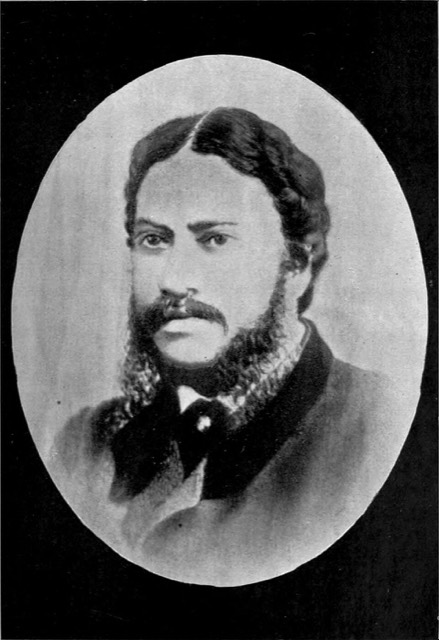
Public domain, via Wikimedia Commons
Quick answer Michael Madhusudan Dutt (1824-1873) gave Bengali blank verse, the sonnet and the epic Meghnad Badh Kavya. His extraordinary life, famous poems and tragic end.
Quick facts
- Born: 25 January 1824, Sagardari, Jessore (now in Bangladesh)
- Died: 29 June 1873, Calcutta
- Languages: Bengali and English
- Known for: Meghnad Badh Kavya; bringing blank verse and the sonnet into Bengali
- Converted: To Christianity in 1843, taking the name Michael
- Trained as: Barrister at Gray's Inn, London
Few literary careers contain a reversal as complete as Michael Madhusudan Dutt's. As a student in 1840s Calcutta he wanted one thing: to be an English poet, celebrated in London. He converted to Christianity, wrote accomplished English verse, and dreamed of Byron. The English literary world barely noticed. Then, in his mid-thirties, he turned back to the mother tongue he had spent his youth escaping, and in roughly five years of furious work he modernised Bengali poetry almost single-handedly.
Between 1858 and 1862 he gave Bengali its first blank verse, its first modern tragedy, its first epic conceived on European lines, and soon after, from a rented room in France, its first sonnets. Writers still call him Madhusudan or simply Michael, the way musicians say Mozart. If you want to understand how a poet imports a form from one language into another, and why that act can electrify a literature, he is the essential case.
The poem
Satata, he nad, tumi paro mor mane.
Satata tomar katha bhabi e birale.
Michael Madhusudan Dutt, 'Kopotakkho Nod' (1866): 'Always, O river, you flow through my mind; always I think of you in this solitude.'
Who He Was: From Sagardari to Versailles
Madhusudan was born on 25 January 1824 in Sagardari, in the Jessore district of Bengal, now in Bangladesh, and educated at Hindu College in Calcutta, the crucible of the Bengal Renaissance. In 1843 he converted to Christianity, taking the name Michael, a decision that cost him his family's support and, under the rules of the day, his place at the college. He spent years in Madras teaching and writing English poetry, including the volume The Captive Ladie, before returning to Calcutta in 1856.
There, working around a day job at the police court, he produced his astonishing run: plays, satirical farces, the narrative poem Tilottamasambhab Kabya, the epic Meghnadbadh Kavya in 1861, and the epistolary poems of Birangana. In 1862 he sailed for England to become a barrister, ran out of money, and moved his family to Versailles, where he wrote his Bengali sonnets while dodging creditors. Ishwar Chandra Vidyasagar's financial rescue became legend. He was called to the bar, returned to Calcutta, and died in poverty on 29 June 1873, three days after his wife Henrietta. He was forty-nine.
The Blank Verse Revolution
Before Madhusudan, serious Bengali poetry lived inside the payar couplet: rhymed lines with a heavy pause at the end of each, sentence after sentence closing with a click. Madhusudan, steeped in Milton and Shakespeare, believed Bengali could carry unrhymed verse whose sentences flowed past the line endings. He tried it first in the play Padmavati, then proved it at scale in Tilottamasambhab Kabya. The innovation was called amitrakshar chhanda, and it did for Bengali roughly what Surrey and Marlowe's blank verse had done for English three centuries earlier.
The craft point is enjambment. Once rhyme no longer seals each line, the sentence becomes the unit of energy, and the poet controls pace by deciding where the syntax spills over. Madhusudan's paragraphs of verse surge and pause like tide water. Any poet writing free or blank verse today can study this: the line break is not decoration, it is an engine, and he was the first to fire it in an Indian language with full deliberation.
Meghnadbadh Kavya: The Epic That Switched Sides
His masterpiece, Meghnadbadh Kavya (The Slaying of Meghnad, 1861), retells an episode of the Ramayana in nine cantos of blank verse, and its scandal has never fully faded: the poem's sympathy lies with the losing side. Ravana appears as a grieving father and doomed king of tragic stature, and his son Meghnad, killed while at prayer and unarmed, becomes the epic's true hero. Madhusudan admired Milton's Satan and Homer's Hector, and he built his poem so that grandeur and pathos gather around the supposed villains.
For a writer, the poem is a masterclass in perspective as invention. The plot was ancient and familiar to every reader; the electricity came entirely from where the camera stood. Retelling a known story from the antagonist's side is now a whole genre, but Madhusudan did it in 1861, in a devout society, with the most sacred story available. The nerve is half the lesson. The other half is technique: he uses epic conventions, invocations, extended similes, councils, descents to the underworld, so confidently that the borrowed machinery feels native.
The Sonnet Arrives in Bengali
Exiled and broke in Versailles, Madhusudan turned homesickness into a formal experiment: could the fourteen-line sonnet, Petrarch's instrument, be made to sing in Bengali? The result, Chaturdashpadi Kabitabali (1866), answered yes and gave the language over a hundred examples. The most beloved, his sonnet to the river Kapotaksha of his childhood, was written beside foreign water while he ached for home.
That sonnet's opening confession, that the river runs constantly through his mind and he thinks of it always in his solitude, established a template Bengali poets still use: the sonnet as a vessel for exile and memory. His other great sonnet subject was regret for the years he wasted chasing English fame, addressed to the Bengali language itself as a treasure-filled mother he had ignored. Both poems turn autobiography into apostrophe, speaking directly to a river or a language as if to a person, and the direct address is what keeps them warm rather than merely clever.
The Signature Moves
Across the epics, sonnets and plays, a few techniques define him.
- Perspective inversion: retell the received story from the condemned side and let sympathy do the rest.
- Enjambed blank verse: kill the couplet's click, let syntax flow across lines, and control speed with the break.
- Apostrophe as structure: whole poems addressed to a river, a language, a fallen hero, so feeling has a target.
- High Sanskritic compounds beside swift narrative: ornate diction used for texture while the story never stalls.
What You Can Learn, and Where to Start
Start with the inversion exercise: take a story your readers know cold and write from inside its villain or its casualty. Then study his line breaks. Read any passage of Meghnadbadh Kavya, even in translation, and mark where sentences cross the line ending; you will find the crossings cluster at moments of high emotion, which is the trick. Finally, copy his apostrophe: when a poem about loss goes limp, try addressing the lost thing directly as 'you' and watch the temperature rise.
Where to begin reading: Meghnadbadh Kavya, available in English translations including one by Clinton B. Seely titled The Slaying of Meghanada; the Kapotaksha river sonnet and the sonnet to the Bengali language from Chaturdashpadi Kabitabali; the farce Ekei Ki Bole Sabhyata for his satirical side; and Birangana, his epistolary poems in the voices of mythological women, a book far ahead of its moment. His self-written epitaph, carved where he is buried in Kolkata, asks the traveller to rest a moment at the grave of Madhusudan; generations of Bengali schoolchildren know it by heart.
Famous poems by Michael Madhusudan Dutt: The Rebel Who Gave Bengali the Sonnet
- Meghnad Badh Kavya (1861): The slaying of Meghnad: Bengali's first epic in blank verse, which dares to tell the Ramayana from the side of Ravana's house and make the demon prince its hero. Still the most studied poem in the language.
- Bangabhasha: The sonnet of homecoming: the poet who chased foreign treasures admits the jewels were in his mother tongue all along. Every Bengali student reads it as autobiography.
- Kopotaksho Nod: Written in France to the small river of his childhood, and the tenderest thing he wrote: the exile hears the Kopotaksho in every river of Europe.
- Brajangana Kavya (1861): Radha's longing for Krishna, in lyric form: the Christian convert writing Vaishnava love poetry better than most believers.
- Birangana Kavya (1862): Letters in verse from the heroines of Indian myth to their men, modelled on Ovid's Heroides: women given the pen for once.
Life at a glance
- 1824: Born at Sagardari on the Kopotaksho river, in Jessore.
- 1843: Converts to Christianity as a student, takes the name Michael, and is cut off by his family.
- 1849: Publishes The Captive Ladie in English at Madras; the fame he wants does not come.
- 1859: Turns to Bengali: the play Sharmistha, and a run of works that remake the language in five years.
- 1861: Meghnad Badh Kavya.
- 1862: Sails for England to become a barrister; poverty follows him through London and Versailles.
- 1867: Returns to Calcutta to practise law.
- 1873: Dies in Calcutta days after his wife Henrietta, poor and estranged, at forty-nine. His self-written epitaph asks the traveller to rest a while at his grave.
What poets can take from this
- Retell a story everyone knows from the perspective of its villain or its collateral victim.
- In unrhymed verse, let sentences cross line endings at moments of high feeling; end-stop for calm.
- Address the lost thing directly as 'you'; apostrophe turns description into relationship.
- Import a form from another tradition deliberately, and keep its rules strict on the first attempt.
- Use ornate vocabulary for texture, but never let it slow the story's forward motion.
- Write your homesickness as geography: one river, one road, one tree, named and spoken to.
Try it yourself
Choose a story your readers know by heart, an epic, a fairy tale, a film, and write a poem of at least twenty lines spoken by its defeated character on the night before the ending. Give the character full dignity and no self-pity.
Questions
Why is Madhusudan Dutt called Michael?
He took the name Michael when he converted to Christianity in 1843 as a young man in Calcutta. The conversion estranged him from his family and community, but the name stayed, and Bengali readers affectionately call him Michael or Madhusudan to this day.
What is Meghnad Badh Kavya about?
It is an 1861 epic in Bengali blank verse retelling, across nine cantos, the killing of Meghnad, son of Ravana, from the Ramayana. Its radical move is sympathy: Ravana's court is rendered with tragic grandeur, and Meghnad's death while unarmed at prayer is framed as the fall of a hero.
Did he write in English?
Yes, his early ambition was to be an English poet, and he published English verse including The Captive Ladie during his Madras years. The work drew little attention, and friends urged him toward Bengali. His turn to his mother tongue in the late 1850s produced everything he is now remembered for.
What is Michael Madhusudan Dutt famous for?
He is famous for Meghnad Badh Kavya, Bengali's first epic in blank verse, and for single-handedly importing the sonnet and blank verse into Bengali. He began by writing in English, converted to Christianity, trained as a barrister, and died in poverty in Calcutta in 1873.
How did Michael Madhusudan Dutt die?
He died on 29 June 1873 in Calcutta, three days after his wife Henrietta, worn down by illness, debt and estrangement from his family. He was forty-nine. His grave at the Lower Circular Road cemetery carries the epitaph he wrote for himself.
This entry on Michael Madhusudan Dutt: The Rebel Who Gave Bengali the S… is maintained by the Writory editorial team for the poetry collection. Enter the poetry contest.
Current poetry contest: Enter the October round. Entries close October 25, 2026 at 11:59 PM GMT+5:30; results are scheduled for October 30, 2026 at 8:00 PM GMT+5:30. Every poem receives a five-criteria score and certificate.
Enter a Writory poetry contest
Enter the October contest and have your own poem read and scored. That first entry makes you a Writorian.