Sukumar Ray: The Nonsense-Verse Genius of Abol Tabol
1887 to 1923
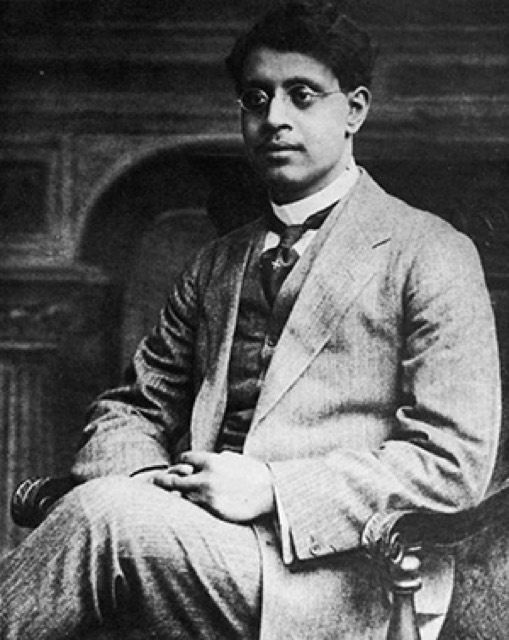
Public domain, via Wikimedia Commons
Quick answer Sukumar Ray (1887-1923) wrote Abol Tabol and gave Bengali its immortal nonsense verse, dying at 35 just before it appeared. His life, famous poems and legacy.
Quick facts
- Born: 30 October 1887, Calcutta
- Died: 10 September 1923, Calcutta
- Language: Bengali
- Known for: Abol Tabol, HaJaBaRaLa, Pagla Dashu
- Family: Son of Upendrakishore Ray; father of Satyajit Ray
- Trained in: Printing technology, in England
Sukumar Ray never saw his masterpiece as a book. Abol Tabol, the collection of nonsense verse that generations of Bengalis know the way English readers know Lewis Carroll, was published on 19 September 1923, nine days after its author died of kala-azar at thirty-five. He had corrected proofs from his sickbed, arranged the poems himself, and placed at the end a strange, tender piece that readers have always heard as a farewell. The book has never been out of print.
It is tempting to file nonsense verse under children's entertainment and move on. Resist that. Ray's poems are some of the most technically disciplined verse in Bengali: strict meters, flawless rhymes, invented words that obey the language's sound laws perfectly, and, under the laughter, a satirical intelligence aimed at pompous officials, arbitrary rules and solemn frauds. If you write light verse, children's poetry or satire, or if your serious poems have simply gone stiff, Ray is the cure.
The poem
Hansh chhilo, sojaru, byakoron mani na,
hoye gelo hansjaru, kemne ta jani na.
Sukumar Ray, 'Khichuri', Abol Tabol (1923): 'There was a duck, and a porcupine (we bow to no grammar); they became a Hansjaru, and how, nobody knows.'
Who He Was: The Brightest of the Rays
Sukumar Ray was born in Calcutta on 30 October 1887 into a family that was practically a creative industry. His father, Upendrakishore Ray Chowdhury, was a writer of children's classics, a pioneer of halftone printing in India, and founder of the children's magazine Sandesh and the press U. Ray and Sons. Sukumar took double honours in physics and chemistry, then travelled to England to train in photography and printing technology. Back home he founded a famous circle called the Nonsense Club, and later the Monday Club, whose punning Bengali nickname suggested a gathering of the empty-headed.
When Upendrakishore died in 1915, Sukumar took over Sandesh, and most of Abol Tabol first appeared in its pages. He wrote and illustrated in tandem, his ink drawings as essential to the poems as the words. He died in 1923, leaving a two-year-old son, Satyajit Ray, who would become one of the greatest filmmakers in the world and who later translated some of his father's untranslatable verse and made a documentary about him.
What Nonsense Verse Actually Is
Nonsense is not gibberish. Gibberish breaks the rules of language; nonsense keeps every rule of grammar, meter and logic intact and changes only the premises. A poem announcing regulations for citizens who sneeze without a licence is impeccably logical once you accept one absurd law. That contract, perfect form around an impossible premise, is the whole genre, and Ray understood it as deeply as Lear or Carroll did.
His nonsense is also thoroughly Bengali rather than imported. The creatures live in recognisable households, the officials speak the language of colonial-era bureaucracy, the food, festivals and scolding aunts are all local. The lesson for any poet flirting with the absurd: fantasy lands hardest when its furniture is familiar. Readers need one foot on known ground so the other can step into the void.
The Signature Moves
Four techniques run through Abol Tabol, and each is a transferable tool.
- Portmanteau creatures: the poem 'Khichuri' (Hotchpotch) splices animals in pairs, most famously the hansjaru, half duck and half porcupine, with the join always placed where the two names share a sound.
- Law and bureaucracy as fantasy material: 'Ekushe Ain' (The Twenty-One Law) imagines a kingdom where slipping in the street or sneezing untimely triggers fines and imprisonment, arbitrary authority made ridiculous by being made systematic.
- Metrical perfection as the straight face: the wilder the content, the tighter his rhythm and rhyme, so the verse itself never cracks a smile.
- Invented words that sound inevitable: names like kumropotash and ramgorur obey Bengali phonology so exactly that they feel remembered rather than coined.
The Satire Under the Laughter
Read as an adult, Abol Tabol keeps flashing its second meaning. The creature called the ramgorur forbids all laughter and lives in perpetual dread of joy: every culture recognises that person. 'Ekushe Ain' needs no footnote for anyone who has stood in line at an office. The pompous elder of 'Gnof Churi', convinced his moustache has been stolen while it sits on his face, is vanity itself. Ray never names a target, which is why the satire has outlived every one of its targets.
This is the craft insight worth stealing: exaggeration aimed at a type rather than a person ages far better than topical mockery. Ray's officials are not the British administration, exactly, and not the Bengali gentry, exactly, and therefore they are both forever. When you write satire, blur the address and sharpen the behaviour.
What You Can Learn
First, that constraint is the engine of comedy. Ray's absurdities are funny because the meter never falters; a wobbly line would break the spell. Write your comic poem in the strictest form you can manage, and let the tension between order and madness do the work. Second, build your inventions by rule. The hansjaru works because duck and porcupine overlap at a syllable; random splicing would not be funny. Give your imagination a mechanism and it will out-invent free association every time.
Third, write for the reading voice. These poems were made to be performed to children, and every effect survives aloud: the rhymes arrive like punchlines, the invented words beg to be repeated. If you write for children, or want a poem that a family remembers, test every line on your tongue before you trust it on the page. Judges and editors, who read hundreds of poems in a sitting, are also listeners at heart; sound that delights is the fastest way through their fatigue.
Where to Start Reading
Bengali readers simply begin with Abol Tabol and go on to everything else. Readers in English are luckier than you might expect, because the family kept the flame.
- Abol Tabol (1923): the essential book, forty-six verses and the author's own drawings.
- HaJaBaRaLa: his prose nonsense novella, a Bengali cousin of Alice in Wonderland in which a handkerchief becomes a cat.
- Pagla Dashu: linked stories about school life's beloved lunatic.
- Nonsense Rhymes, translated by Satyajit Ray: a filmmaker wrestling his father's wordplay into English.
- The Select Nonsense of Sukumar Ray, translated by Sukanta Chaudhuri: the fullest scholarly rendering.
Famous poems by Sukumar Ray: The Nonsense-Verse Genius of Abol Tabol
- Abol Tabol (1923): The title poem of the collection: an invitation into pure nonsense, where rhyme and rhythm are the only laws that hold.
- Kumropotash: The pumpkin-puff: an absurd creature whose approach demands absurd protocols. Bengali children have obeyed them for a century.
- Baburam Sapure: The snake charmer asked to bring only snakes that neither bite nor hiss: still the first nonsense poem most Bengali children learn.
- Ekushe Ain: The Rule of Twenty-one: bureaucracy inflated into perfect absurdity. Adults keep discovering it is not entirely fiction.
- Khichudi: Hotchpotch: the duck fuses with the porcupine, the elephant with the whale, and Bengali gets its most quoted portmanteau zoo.
Life at a glance
- 1887: Born in Calcutta into the Ray family of printers, illustrators and storytellers; son of Upendrakishore Ray.
- 1911: Leaves to study printing and photographic technology in England.
- 1915: Takes over the family press U. Ray and Sons and the children's magazine Sandesh after his father's death.
- 1921: His son Satyajit is born, who will become one of cinema's greatest directors.
- 1923: Dies of kala-azar at 35 on 10 September; Abol Tabol is published nine days later.
What poets can take from this
- Write comic verse in your strictest meter; the deadpan of perfect form is the joke's straight man.
- Invent by mechanism, not randomness: splice two words where they share a sound, then describe the result seriously.
- Accept one absurd premise, then follow its logic with total rigour.
- Aim satire at a recognisable type, never a named target, and it will outlive the news.
- Keep fantasy's furniture familiar: real kitchens, real offices, impossible occupants.
- Read every draft aloud to a child if you can find one; their boredom is the most honest edit.
Try it yourself
Invent a creature by fusing two animals whose names share a syllable in your language. Write a poem in strict rhyme that documents its habits, diet and grievances with the seriousness of a government report.
Questions
What does Abol Tabol mean?
The phrase means something like 'gibberish' or 'rubbish talk' in Bengali, a self-mocking title for a book of nonsense verse. Sukumar Ray compiled it himself in his final illness, and it was published in September 1923, nine days after his death.
How is Sukumar Ray related to Satyajit Ray?
Satyajit Ray, the filmmaker of the Apu Trilogy, was Sukumar's only child, two years old when his father died. Satyajit later revived the family magazine Sandesh, translated some of his father's verse into English, and made a 1987 documentary about him.
Is Abol Tabol only for children?
Children love it first, but adults keep it. Under the invented beasts and comic rhymes runs a satire on arbitrary authority, pomposity and humourlessness that readers have applied to every era since. It is regularly ranked among the greatest works of Bengali literature for any age.
What is Sukumar Ray famous for?
Sukumar Ray is famous as the father of Bengali nonsense literature: the poems of Abol Tabol, the prose fantasy HaJaBaRaLa and the schoolboy stories of Pagla Dashu. He ran the children's magazine Sandesh, and his son Satyajit Ray became the celebrated filmmaker.
How did Sukumar Ray die?
He died on 10 September 1923, aged 35, of kala-azar, a parasitic fever that was then incurable. He kept writing and editing from his sickbed; Abol Tabol, his masterpiece, was published just nine days after his death.
This entry on Sukumar Ray: The Nonsense-Verse Genius of Abol Tabol is maintained by the Writory editorial team for the poetry collection. Enter the poetry contest.
Current poetry contest: Enter the October round. Entries close October 25, 2026 at 11:59 PM GMT+5:30; results are scheduled for October 30, 2026 at 8:00 PM GMT+5:30. Every poem receives a five-criteria score and certificate.
Enter a Writory poetry contest
Enter the October contest and have your own poem read and scored. That first entry makes you a Writorian.