Vallathol Narayana Menon: The Mahakavi Who Founded Kalamandalam
1878 to 1958
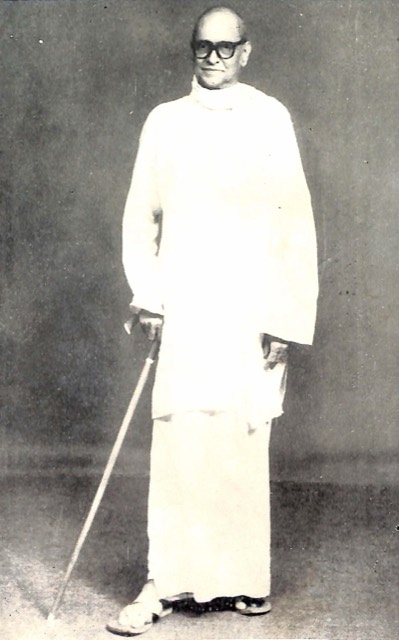
Public domain, via Wikimedia Commons
Quick answer Vallathol Narayana Menon (1878-1958), Mahakavi of Malayalam, wrote Ente Gurunathan and Magdalana Mariyam and founded Kerala Kalamandalam. His life and famous poems.
Quick facts
- Born: 16 October 1878, Chennara near Tirur, Kerala
- Died: 13 March 1958
- Language: Malayalam
- Known for: The modern triumvirate of Malayalam poetry, with Kumaran Asan and Ulloor
- Founded: Kerala Kalamandalam, 1930
- Honours: Padma Bhushan 1954
Around the age of thirty, Vallathol Narayana Menon went deaf. For a poet whose reputation rested on the music of his lines, this should have been the end of the story. Instead he wrote Badhira Vilapam, the lament of the deaf man, turning the catastrophe itself into one of Malayalam's memorable poems, and then went on composing sound-rich verse for another four decades, hearing the music only in his head. If you want a single image of what discipline in craft means, take that one: a deaf man counting syllables against an inner ear the world could no longer correct.
Vallathol, born in 1878 near Tirur in present-day Kerala and living until 1958, completes the renaissance triumvirate with Kumaran Asan and Ulloor. He was the traditionalist of the three in training and the institution builder in legacy: the founder of Kerala Kalamandalam, the academy that rescued Kathakali dance-drama from near extinction. For writers, he is the great example of classical technique redirected at modern subjects, and of a poet whose sense of the visual was as developed as his sense of sound.
Who Vallathol Was
Vallathol's education was old school in the literal sense: Sanskrit grammar, kavya and Ayurvedic texts, the full classical apparatus. He proved his command early by translating Valmiki's Ramayana into Malayalam, an enormous apprenticeship that stamped his metrical instincts for life. His original mahakavya, Chitrayogam, established him in the classical line, but the work that carried him to the public came in the flood of shorter poems collected across the many volumes of Sahitya Manjari, and in narrative poems such as Magdalana Mariyam, on Mary Magdalene, published in 1921.
Then there is the second career. In 1930 he founded Kerala Kalamandalam, raising money and legitimacy for Kathakali and Mohiniyattam when both art forms were dying of neglect. The Indian government honoured him with the Padma Bhushan in 1954. When Kerala celebrates him now, it celebrates a double gift: the poems, and an entire performing tradition that survived because a poet decided it must.
Signature Move One: Sweetness of Diction as a Deliberate Instrument
Malayalam critics traditionally assign each of the triumvirate a defining quality, and Vallathol's is madhurya, sweetness: a diction chosen for flow, assonance and grace of sound. This was not accident or mere temperament. His Sanskrit training gave him a jeweller's inventory of word choices, and he consistently selected for the ear, arranging vowels and consonants so lines glide. Readers who know no Malayalam can still hear it when his verse is recited; the texture is audibly smooth, built for chanting aloud.
The craft point is that euphony is a choice you make word by word, not a mood that descends. When two words mean the same thing, one of them sounds better beside its neighbours. Slowing down enough to hear that difference, draft after draft, is the whole secret.
Signature Move Two: The Poem as Staged Scene
It is no coincidence that the man who saved Kathakali wrote intensely visual poetry. Vallathol composes like a director: figures posed, gestures precise, the light placed. Magdalana Mariyam works through vivid pictorial episodes, Mary's beauty, her humiliation, the moment of grace, each rendered as if for performance. His celebrated short poems often turn on a single seen gesture carrying the whole meaning, and the influence runs both ways; his poems have themselves been adapted into dance.
Try the director's discipline on your own drafts. For every stanza ask: what exactly would an audience see? Where are the bodies, what are the hands doing, where does the light come from? Poems that answer these questions acquire a physical presence that purely stated emotion never achieves.
- He builds emotion through posture and gesture before allowing any character to speak.
- Key scenes get slowed down, described beat by beat, the way a dancer elaborates a moment.
- Background detail is minimal; attention stays on the human figure, as on a stage.
Signature Move Three: Classical Metre Carrying Modern Fire
Vallathol lived through the independence movement and joined it in verse. His poem Ente Gurunathan, my great teacher, is a tribute to Gandhi, and his patriotic poems circulated widely during the freedom struggle. What makes them interesting technically is the vehicle: strict traditional metres and a classical register carrying urgent contemporary politics. The old form gave the new message dignity and memorability; the new message gave the old form a reason to live. He did the same for social themes, writing with sympathy for the poor and for religious harmony, notably in choosing a Christian subject for Magdalana Mariyam, a Hindu poet honouring another faith's story of mercy.
The lesson cuts against the assumption that radical content demands broken form. Sometimes the most subversive container is the most traditional one, because it carries authority into the argument.
Signature Move Four: Mother Tongue as Subject and Cause
Vallathol wrote repeatedly in praise of Malayalam itself and of Kerala's cultural inheritance, and his pride was practical. He translated world classics into Malayalam, championed the language's classical status, and treated its performing arts as part of its literature. Founding Kalamandalam was the same instinct at institutional scale: a conviction that a language lives not only in books but in bodies, stages and schools.
For a working poet, his example enlarges the job description. Caring for your language can mean translating into it, teaching it, archiving it, building the room where it is performed. The poems you enable can be part of your work alongside the poems you write.
What You Can Learn From Him
Train your ear on purpose: read your drafts aloud, or as Vallathol was forced to, hear them precisely in the mind, and revise for vowel music until the line flows without stumble. Stage your poems; give every emotion a body and a gesture. Do not abandon inherited forms reflexively, but test whether a traditional structure might give your modern subject more force, not less. And take the long apprenticeship seriously: his Ramayana translation was years of unglamorous labour that paid interest for a lifetime. Translation, imitation and metrical exercise are not detours from your own voice; they are how a voice gets built.
Structure and language, two of the five criteria Writory's judges score every month, were precisely Vallathol's strengths, and both grew from practice regimes any of us can copy.
Where to Start Reading
Magdalana Mariyam is the usual gateway, a narrative poem whose pictorial method survives even in translation. Badhira Vilapam pairs biography and art movingly. Ente Gurunathan shows the patriotic register, and dipping into Sahitya Manjari's shorter poems reveals his range at smaller scale. Malayalam readers should also sample his Ramayana translation to watch a master metricist at work. If you visit Kerala, Kalamandalam at Cheruthuruthy is part of reading him too: the institution is his largest composition.
Famous poems by Vallathol Narayana Menon: The Mahakavi Who Founded Kalamandalam
- Ente Gurunathan: My great teacher: his hymn to Mahatma Gandhi, recited across Kerala for a century and still the poem most readers name first.
- Magdalana Mariyam (1921): A khandakavya on Mary Magdalene, proof that his Hindu classical training could hold a Christian story with complete tenderness.
- Badhiravilapam: The lament of the deaf: his answer to losing his hearing around thirty, grief turned into one of Malayalam's most personal poems.
- Bandhanasthanaya Aniruddhan: An early narrative poem that announced a new music in Malayalam verse.
- Sahityamanjari: The eleven-part series of shorter poems where his patriotism, craft and warmth live side by side.
Life at a glance
- 1878: Born at Chennara, near Tirur in Malabar.
- 1907: Completes a full Malayalam verse translation of the Valmiki Ramayana, the work that makes his name.
- c. 1907: Loses his hearing around age thirty and answers the loss with Badhiravilapam.
- 1921: Magdalana Mariyam.
- 1930: Founds Kerala Kalamandalam with Manakkulam Mukunda Raja, rescuing Kathakali from near extinction.
- 1954: Padma Bhushan.
- 1958: Dies at 79, mourned as the Mahakavi.
What poets can take from this
- Revise one poem purely for sound: change no meanings, only swap words for better-sounding synonyms, and hear what improves.
- Block your poem like a stage scene, deciding where each body stands and what the hands do, before writing emotion.
- Take a modern grievance and draft it inside the strictest form you know, and note what the form adds.
- Translate a short poem into your language as an ear-training exercise, privileging music over literalness.
- Write a tribute poem to a teacher that stays concrete: their gestures, their room, their habits, never their virtues in the abstract.
- Slow your poem's climactic moment down to three times its natural length, elaborating it gesture by gesture.
Try it yourself
Write a poem about losing one sense, imagined or real, in which the poem's own style compensates: if hearing is lost, make the poem intensely visual; if sight, make it all sound and touch, so the reader experiences both the loss and the adaptation.
Questions
What is Vallathol famous for besides poetry?
He founded Kerala Kalamandalam in 1930, the institution that rescued Kathakali and other Kerala performing arts from decline and remains their premier academy today. Many who have never read his poems know him as the man who saved Kathakali. The Indian government honoured him with the Padma Bhushan in 1954.
What is Magdalana Mariyam about?
Published in 1921, it is a narrative poem retelling the story of Mary Magdalene, her fall and her redemption through the compassion of Christ. A Hindu poet choosing a Christian subject was itself a statement of the humanist breadth of the Kerala renaissance. Its vivid scene-by-scene construction makes it his most accessible longer work.
Was Vallathol really deaf when he wrote his poems?
He lost his hearing around the age of thirty and remained deaf for the rest of his long career, composing his most famous work afterwards. He wrote about the experience directly in Badhira Vilapam, the lament of the deaf. His continued mastery of sound-rich metre despite deafness is one of the most cited facts of Malayalam literary history.
What is Vallathol Narayana Menon famous for?
Vallathol is famous on two fronts: as one of the three great modern Malayalam poets, author of Ente Gurunathan and Magdalana Mariyam, and as the founder of Kerala Kalamandalam in 1930, which saved Kathakali and Kerala's classical performing arts for the modern age.
Which are Vallathol's most famous poems?
Ente Gurunathan, his tribute to Gandhi, is the best known. Magdalana Mariyam, Badhiravilapam and the Sahityamanjari series complete the core. His Malayalam Ramayana translation first made him famous.
This entry on Vallathol Narayana Menon: The Mahakavi Who Founded Kalama… is maintained by the Writory editorial team for the poetry collection. Enter the poetry contest.
Current poetry contest: Enter the October round. Entries close October 25, 2026 at 11:59 PM GMT+5:30; results are scheduled for October 30, 2026 at 8:00 PM GMT+5:30. Every poem receives a five-criteria score and certificate.
Enter a Writory poetry contest
Enter the October contest and have your own poem read and scored. That first entry makes you a Writorian.